
Output that does not depend on who is on shift.
You answer for output, takt and delivery, but on manual lines those numbers depend on people. Arkite guides, validates and measures every manual step, so new operators, new variants and new shifts deliver the same result.
Last updated
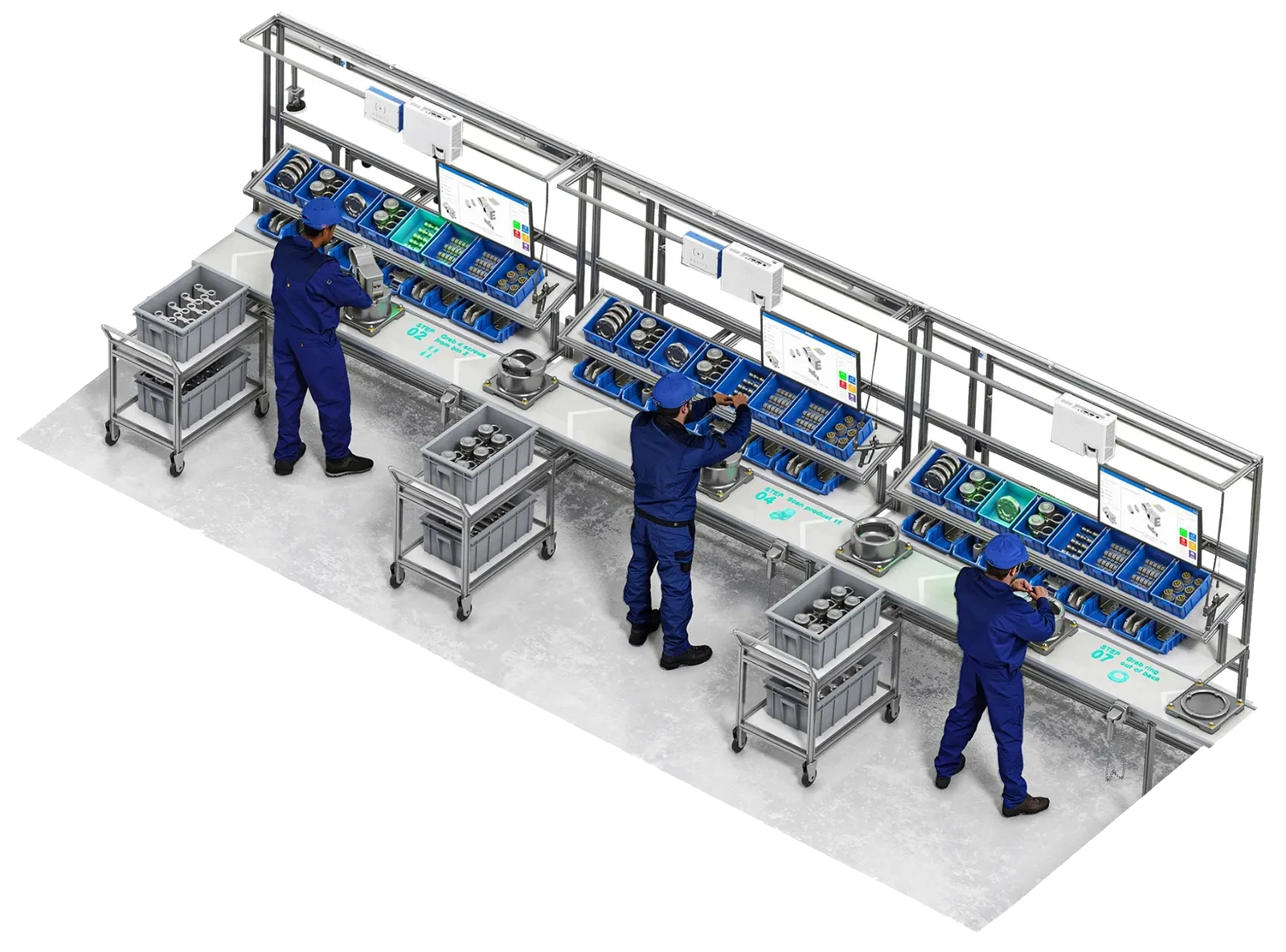
What production managers tell us.
-
A new operator needs weeks next to a senior colleague before they can work alone.
Onboarding and turnover
-
Every variant changeover is a risk. One wrong part and the batch goes to rework.
Variant complexity
-
Output depends on who is on shift today.
Process stability
-
I see what went wrong at the end of the shift, when it is too late to act.
Visibility
Four production problems, solved at the workstation.
-
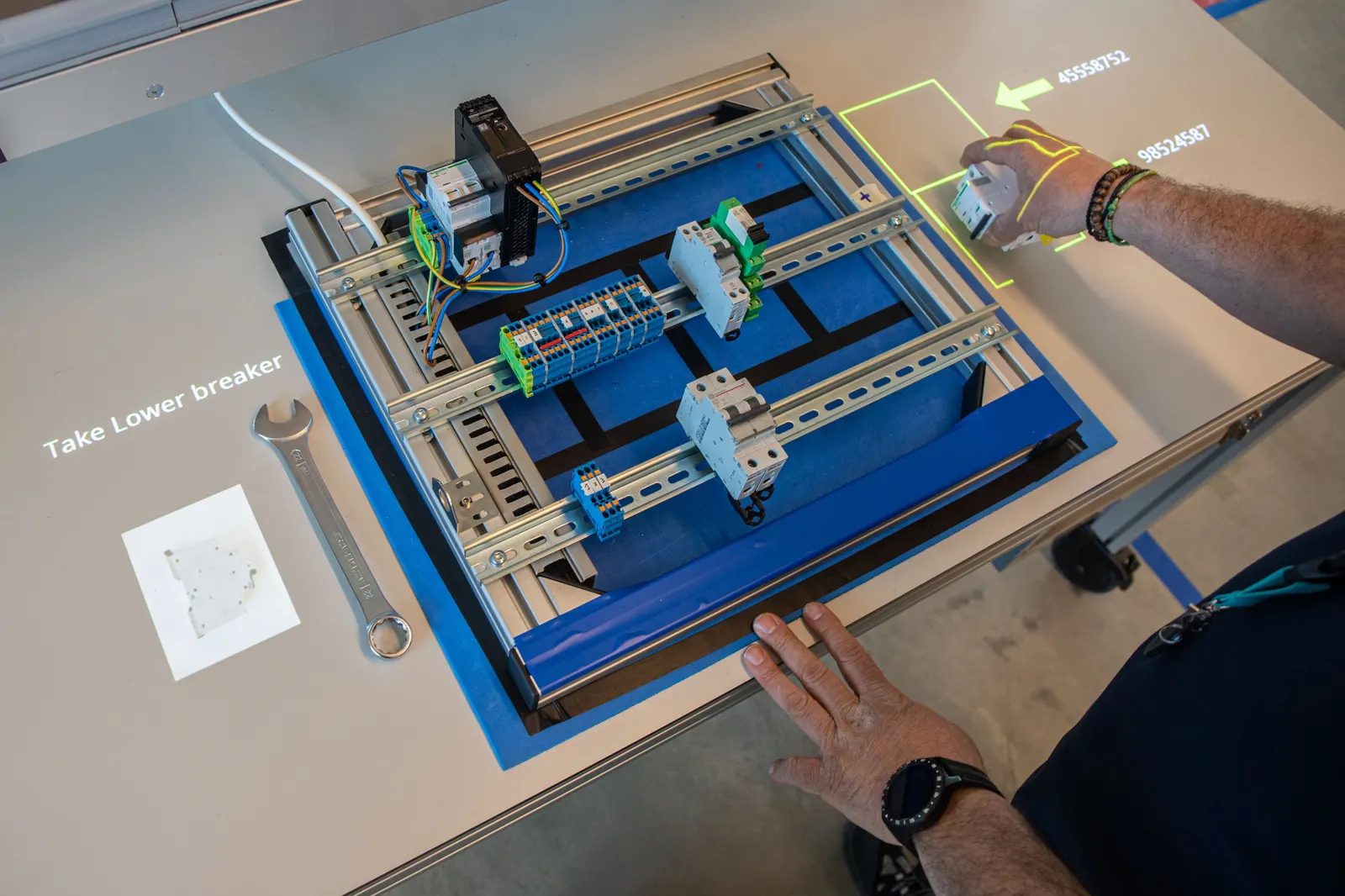 Arkite GUIDE 01The challenge
Onboarding ties up your best operators, and temporary staff take too long to become productive.
How Arkite solves itInstructions in the operator’s line of sight
Each step is projected on the work surface: what to pick, where to place it, what comes next. Experience levels reduce the guidance as operators gain proficiency.
- New operators work independently sooner
- Senior operators stay on their own work
- Temporary staff deployable on any connected station
-
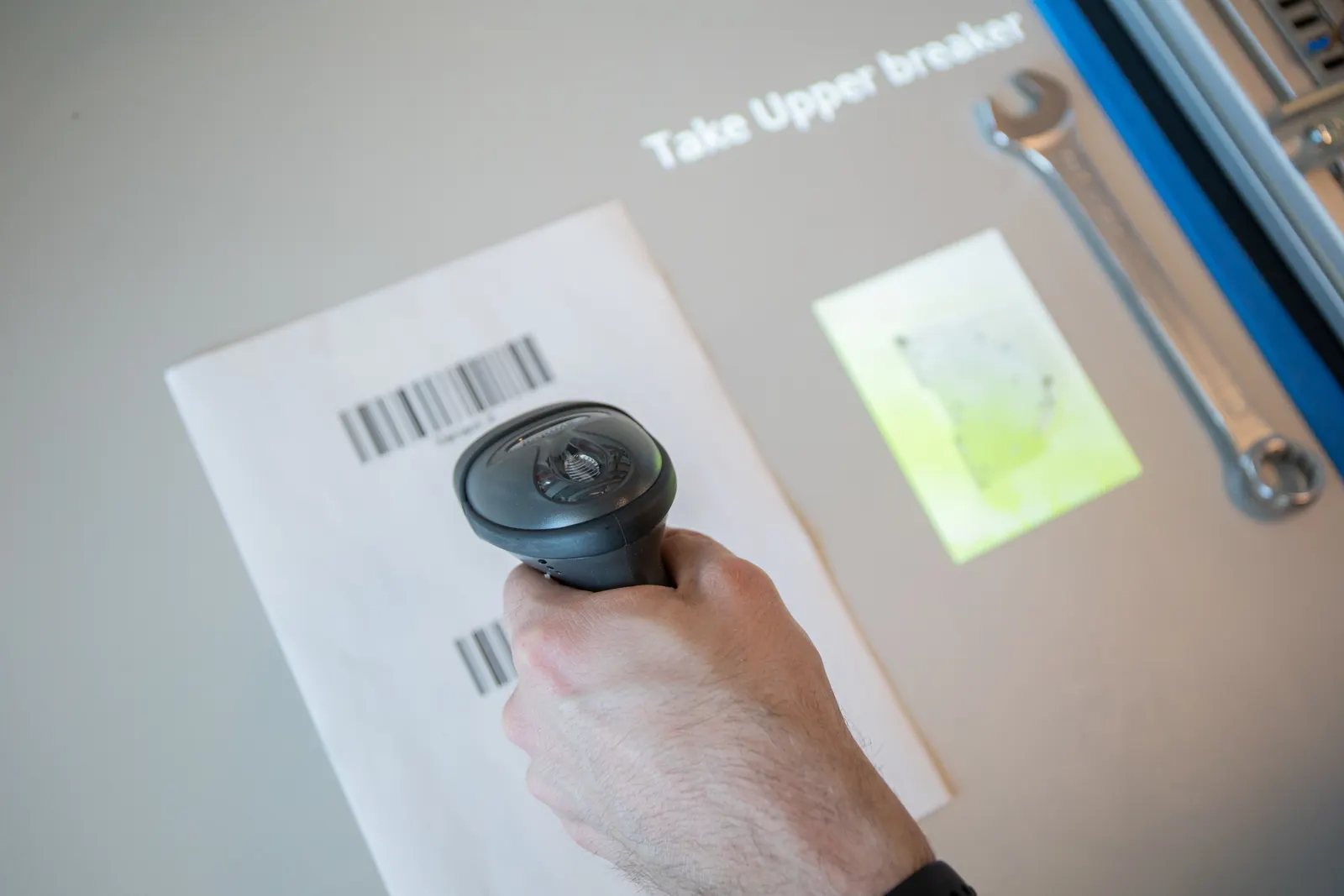 Arkite Platform 02The challenge
High mix means frequent changeovers, and every changeover relies on memory.
How Arkite solves itThe right job for every variant, automatically
The MES or a barcode scan loads the correct job and variant at the workstation. Shared steps are defined once and variant-specific steps appear only when they apply.
- No manual job selection
- Changeovers without retraining
- New variants added centrally
-
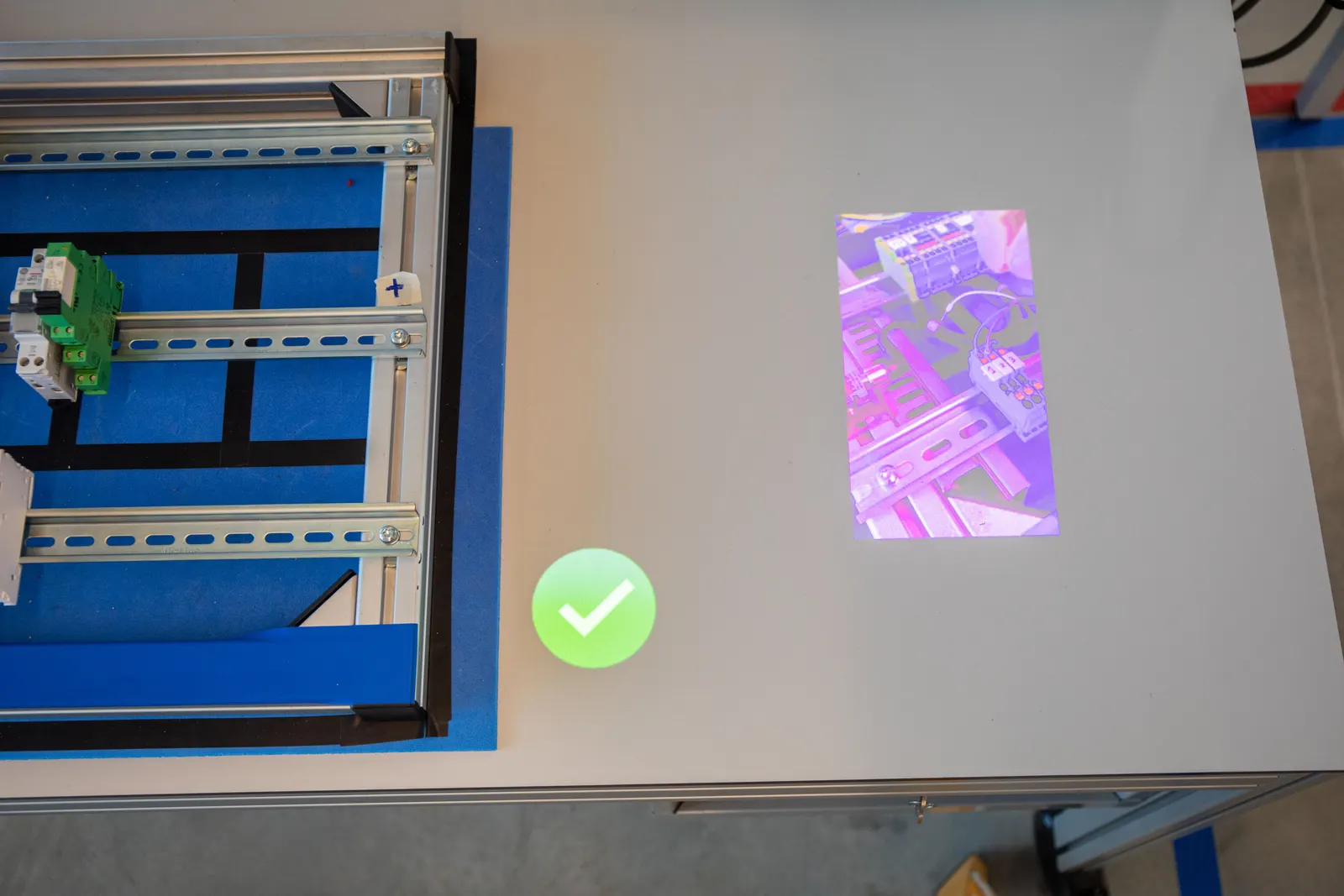 Arkite VALIDATE 03The challenge
Each operator and each shift works slightly differently, and errors surface at end of line.
How Arkite solves itThe same validated procedure on every shift
The 3D sensor checks every pick and assembly action and its sequence. The workflow continues after a correct action and warns the operator the moment something is wrong.
- Errors stopped at the step
- One standard sequence for everyone
- Less rework at end of line
-
 Arkite DATA 04The challenge
You only see performance after the shift, in a report that does not tell you which step lost the time.
How Arkite solves itLive data from every workstation
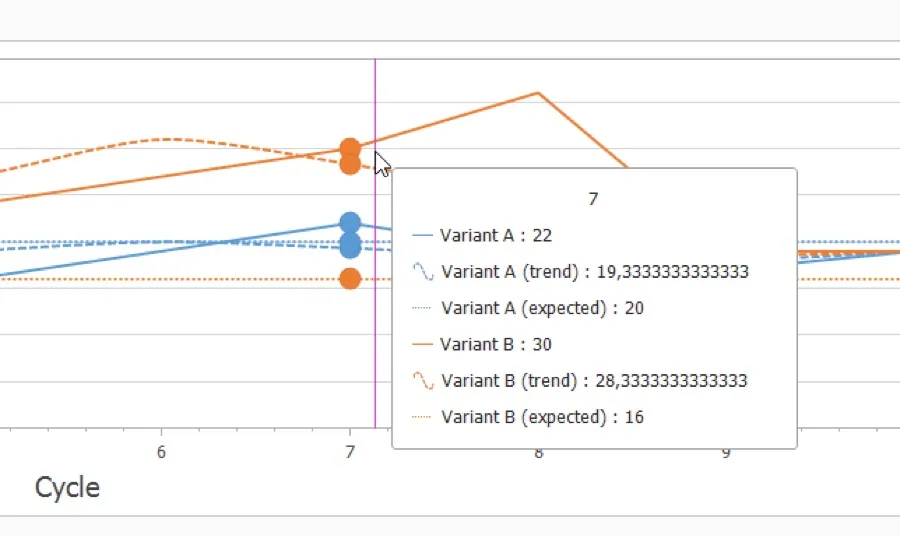
Dashboards show workstation status, job output, cycle time against expected cycle time and step durations while the shift runs. Data exports to Power BI or other BI tools.
- Bottlenecks visible during the shift
- Cycle and step times per unit
- A factual basis for improvement
The indicators Arkite moves on a manual line.
- Down
Time to competency
New and temporary operators are productive earlier.
- Down
Errors, scrap and rework
Mistakes are stopped at the step, not found at end of line.
- Down
Cycle time variation
The same procedure for every operator and shift.
- Up
Output per shift
Less waiting, searching and correcting at the station.
- Up
Workforce flexibility
Operators move between lines without retraining from paper.
- Up
Visibility per station
Live status, output and step times on one dashboard.
The size of each effect depends on your process. It is measured on your own pilot workstation.
How a shift runs with Arkite.
- 01
Operator logs in
A badge scan identifies the operator and sets the experience level and language.
- 02
Job arrives from the MES
The workstation retrieves the correct job and variant automatically, removing manual selection errors.
- 03
Guided, validated execution
Instructions are projected on the workbench. With VALIDATE, the 3D sensor confirms each pick and assembly action and the workflow continues automatically.
- 04
Data flows back
Cycle times, step durations, errors and torque values are logged per unit on the central Arkite server.
Questions from operations
Will guidance slow down experienced operators?
No. Experience levels control which visualizations are shown and how fast detections react, so experienced operators work with only the guidance they need.
Can we start on one line?
Yes. Most deployments start with a pilot workstation. New workstations connect to the same server and existing projects are immediately available, so a proven process can be rolled out without rebuilding it.
Does Arkite support kitting and logistics as well as assembly?
Yes. Picking and kitting operators are guided by projection or DMX pick-to-light, and the 3D sensor validates each pick. The same platform covers assembly and packaging stations.
How do we build the business case?
With your own data: current error, scrap and rework rates, labor cost and cycle times, operator turnover and variant count. A pilot workstation validates these assumptions in your environment.
Build the business case on your own production data.
The business case for Arkite is built on your own production data. A pilot workstation is the most reliable way to validate these assumptions in your own environment before a wider rollout.
- Current error, scrap and rework rates, and the cost per defect
- Labor cost and cycle times
- Number of new operators trained per year and time to full competency
- Number of product variants and frequency of changes
- Cost of quality escapes and customer complaints
See Arkite on a line like yours.
We show the platform in the context of your products and define the scope of a pilot workstation together.