
Precision in high-mix electronics assembly.
Manual PCB assembly, box build and precision modules combine small parts, many variants and low volumes. Arkite guides each placement, validates it and records the result for every board or unit.
Last updated
What we hear from electronics manufacturers.
-
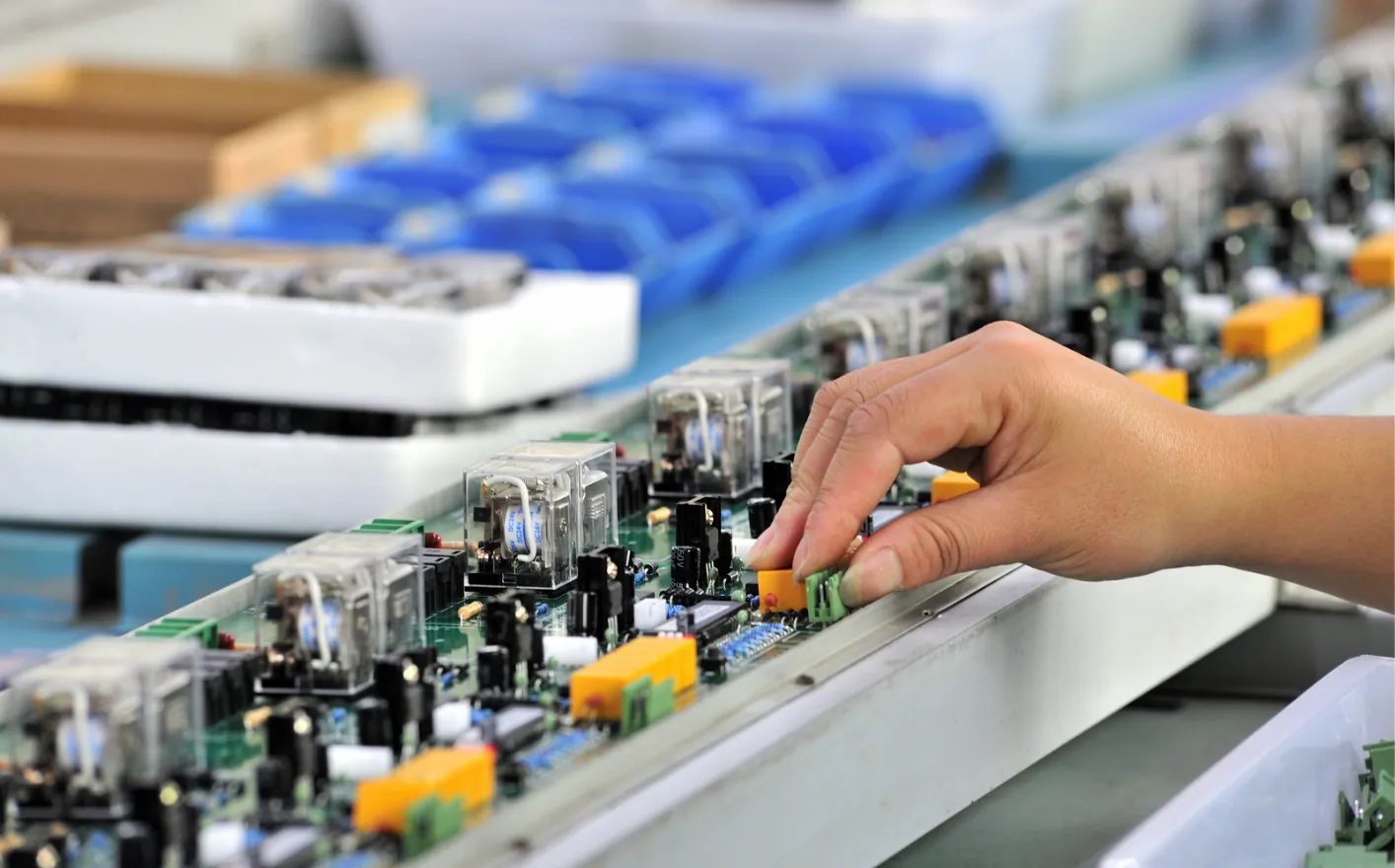
Resistors, capacitors and connectors look alike, and the positions are millimeters apart.
Small, similar components
-
A wrong or forgotten part only shows up at functional test.
Late detection
-
New products and revisions arrive faster than we can update the instructions.
Frequent changeovers
-
Customers ask which components and steps went into each serial number.
Evidence per board
What Arkite does for electronics manufacturers.
-
 Arkite GUIDE 01The challenge
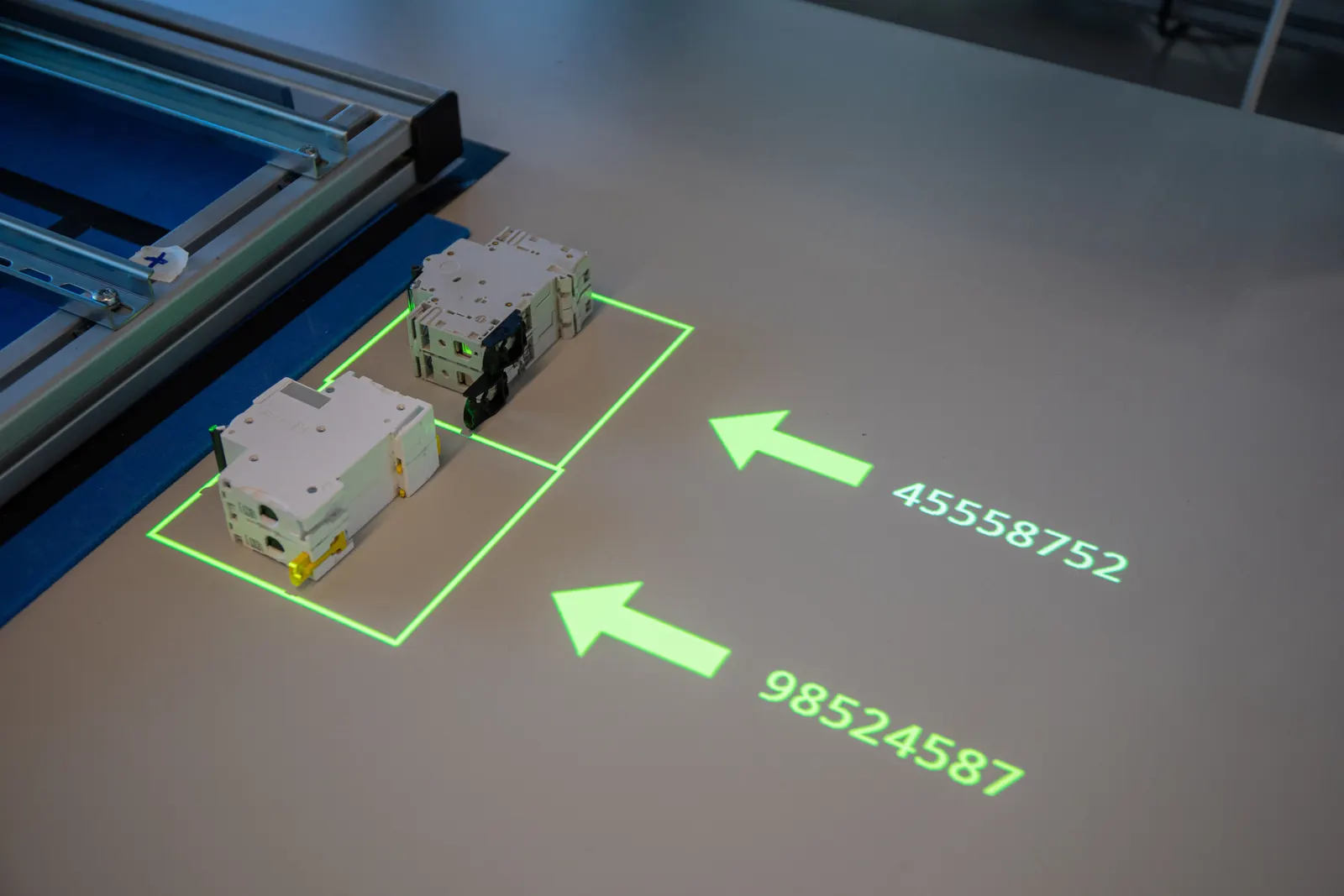
Placement locations are small and close together, and similar components are easy to swap.
How Arkite solves itPlacement guidance at true scale
Instructions and CAD-based images are projected 1:1 on the board or fixture, highlighting the next bin and the exact location. Projects can be created from CAD/CAM input.
- The exact position for every component
- The right bin highlighted per step
- Projects created from CAD/CAM data
-
 Arkite VALIDATE 02The challenge
When operators take several parts at once and place them in any order, parts get dropped, misplaced or forgotten.
How Arkite solves itOne fixed sequence, validated per step
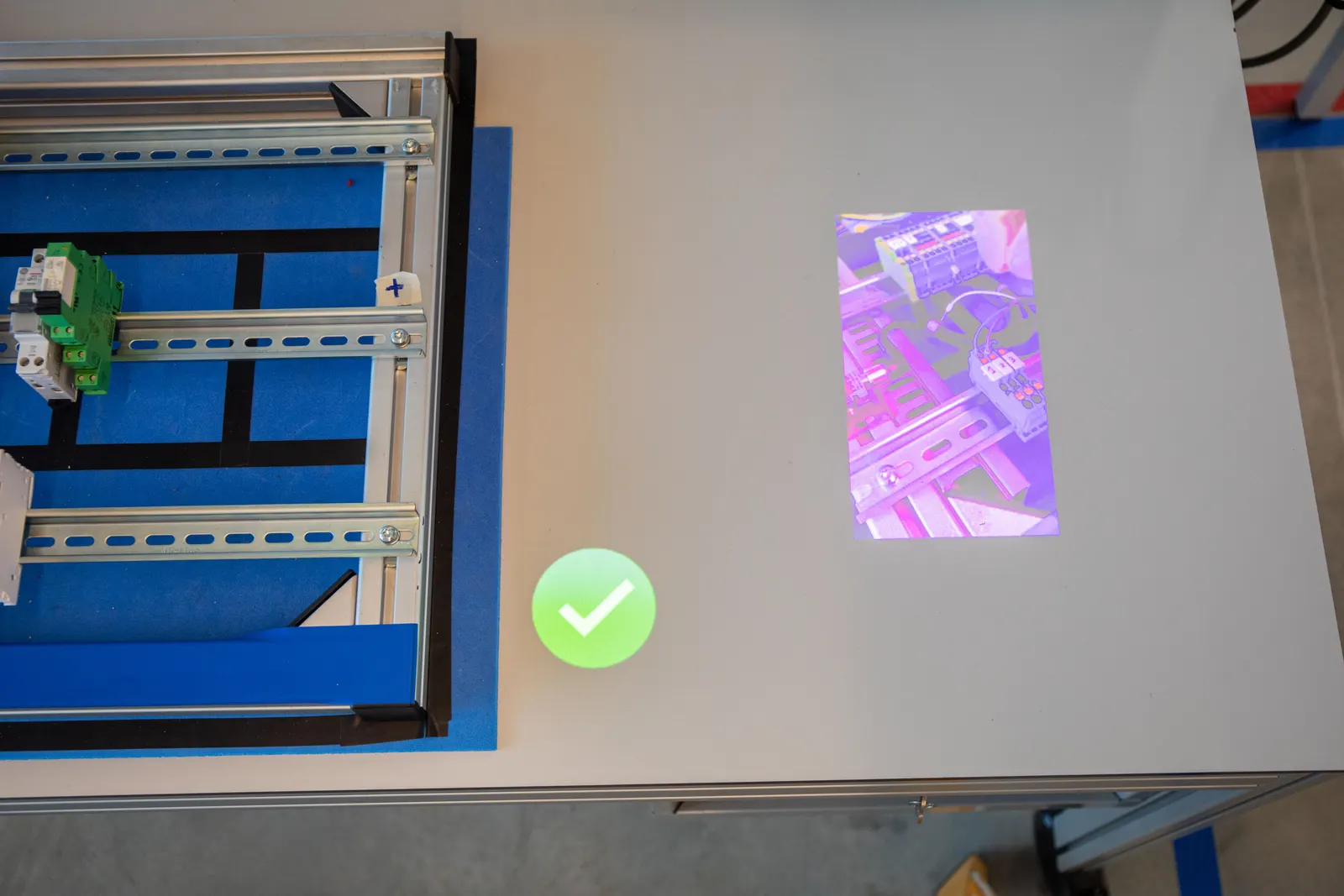
The 3D sensor confirms each pick and placement before the next step starts, so every operator follows the same order and no part is skipped.
- The same method for every operator
- No skipped components
- Errors corrected at the bench
-
 Arkite VISION 03The challenge
Defects found at functional test have already consumed time and material.
How Arkite solves itInspection during assembly, not at test
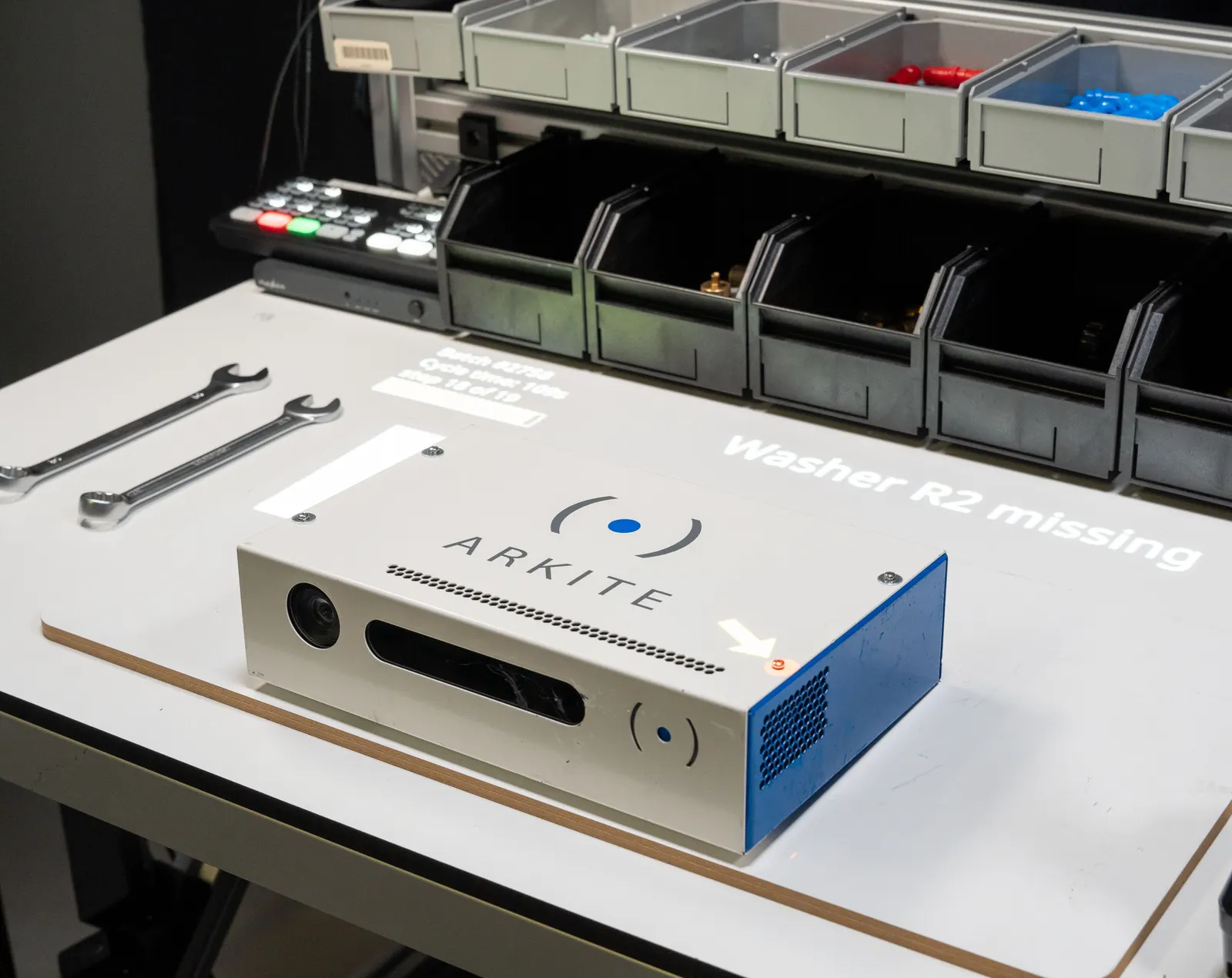
The vision sensor checks presence, position and orientation of components from 0.5 cm, before the next step. It also reads barcodes, QR codes, Data Matrix codes and text.
- Defects found in-process
- Higher first pass yield at test
- Codes read at the station
-
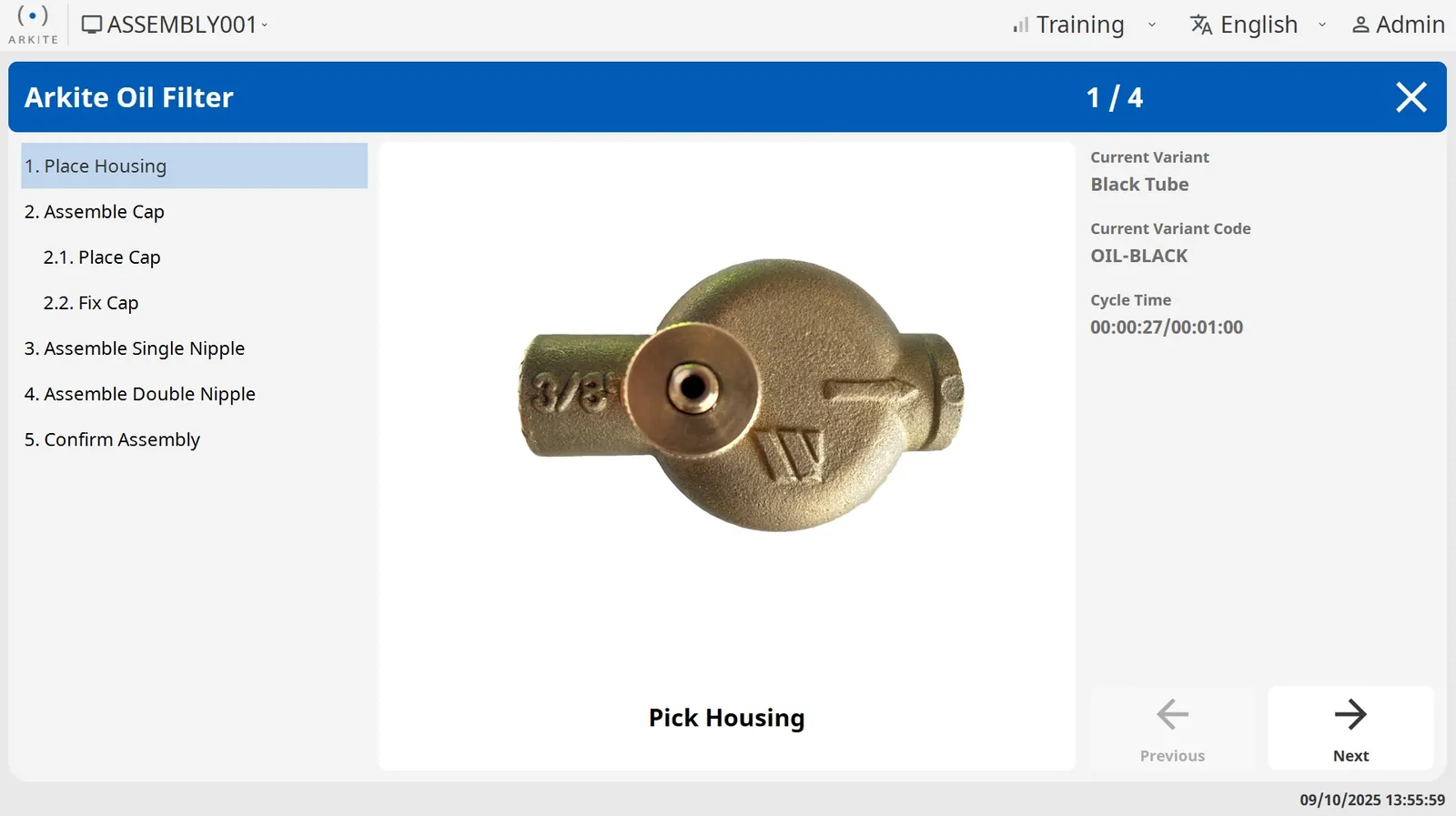 Arkite Platform 04The challenge
Revisions must reach the station quickly, without paper manuals running in parallel.
How Arkite solves itChangeovers and revisions without paper
Jobs are released centrally through Draft, Review and Production. The MES connects through the Arkite API with scanning of components and serial numbers, and conveyor stoppers release a pallet only when all steps are complete.
- One released version on every station
- MES and serial number integration
- Conveyor and stopper control
The topics that matter, and what Arkite does for each.
- High mix, low volume HMLV
One station builds many products. The job and variant load by scan or from the MES, and shared steps are defined once.
- THT and odd-form placement
A 1:1 projection on the board shows the exact location and orientation of each component, step by step.
- Box build
Guided sequences for module, cable and connector mounting, with smart screwdrivers enabled only at the correct step and position.
- First pass yield
Errors are stopped at the step where they happen, instead of being found at functional test.
- Serial number traceability
Per board or unit: every step, validation result, operator, time and torque value, linked to the serial number.
- NPI and revisions New product introduction
New jobs from CAD/CAM input or from a written description with Arkite AI, released through an approval workflow.
Electronics and high-tech manufacturers running Arkite.




What Arkite did for them
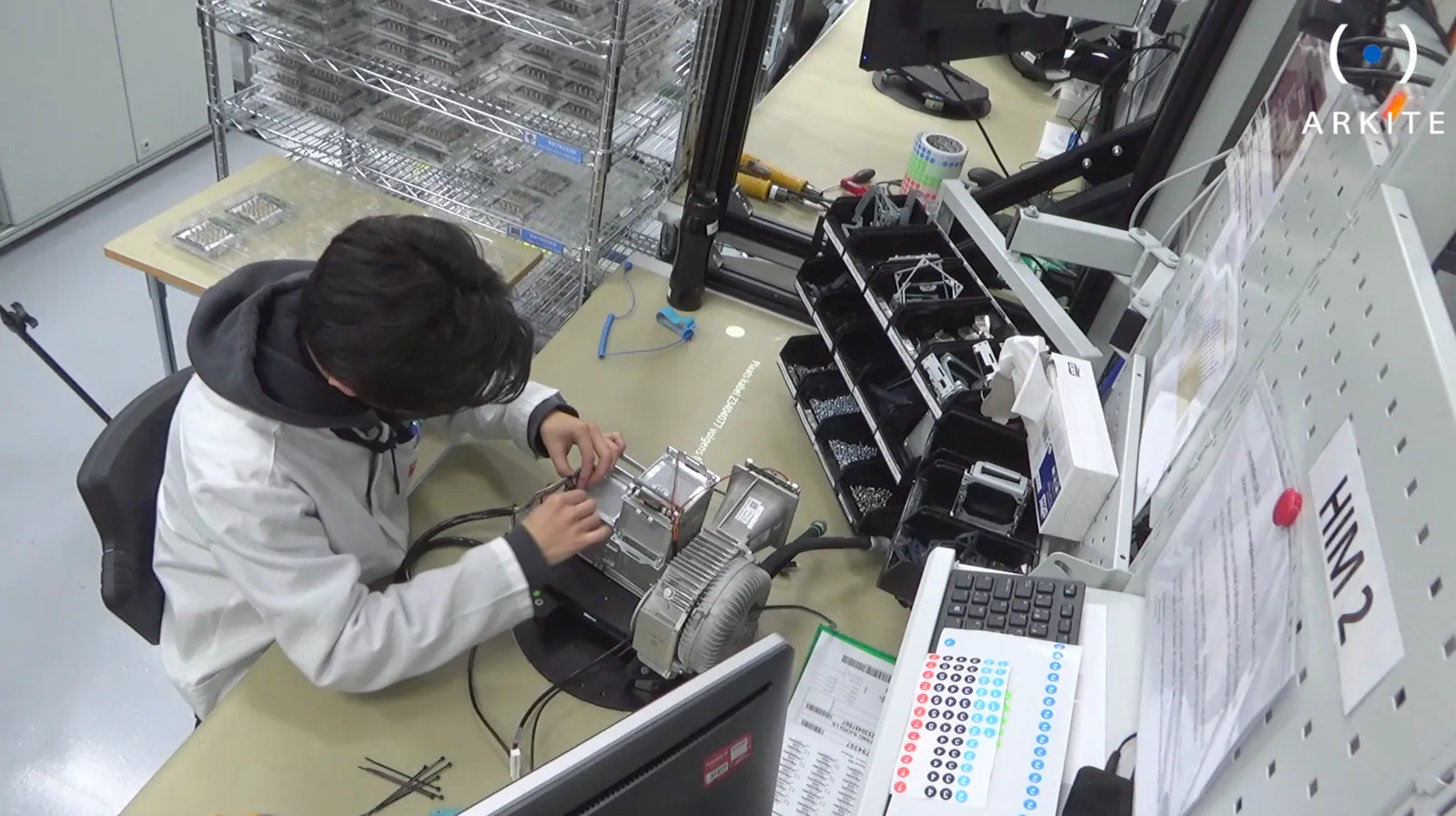
Where electronics manufacturers use Arkite
Questions from electronics teams
Can Arkite check very small components?
The 3D sensor validates operator actions and the presence of objects at taught locations. For small parts, Arkite VISION adds a high-definition Vision sensor that checks presence from 0.5 cm, orientation, and position within a configurable tolerance.
How quickly can a new product be introduced?
Engineers build jobs in the no-code editor on any PC connected to the Arkite server, without stopping production. Since version 2026.2, a job can also be generated with AI from a written description and reviewed by the engineer. Published updates are available at the workstation immediately.
Does Arkite work with our MES?
Yes. Orders, variants and operator assignments come from the MES through the Arkite API or standard protocols, and step results and serial numbers go back. Arkite does not replace the MES. It connects it to the operator.
Discuss your electronics assembly
Show us a board or module with placement or variant issues. We will walk through how Arkite would guide and validate it.