
Interpretation
Static SOPs rely on each operator to translate text into action.
Standard operating procedures describe how work should be done. Arkite makes sure it is done that way, by delivering the standard at the point of execution and validating every step.
Last updated
Most plants have documented standard work. In practice, execution still varies between shifts, workstations and people. Operators interpret steps differently, informal shortcuts develop, and printed instructions become outdated as soon as engineering changes a process.
The result is unpredictable quality and cycle times, and no proof that steps were executed as specified. For multi-line and multi-plant operations, the gap between the documented standard and actual execution grows with every new site.
Static SOPs rely on each operator to translate text into action.
Paper and local files are updated manually and inconsistently.
Experienced operators compensate for gaps in process documentation.
Nothing confirms that the standard was followed for each unit.
Process engineers translate SOPs into digital workflows in the no-code Arkite editor. Every project has a version and a status, Draft, Review or Production, with a full version history. An optional approval workflow allows only users with the Approver role to release a project to production.
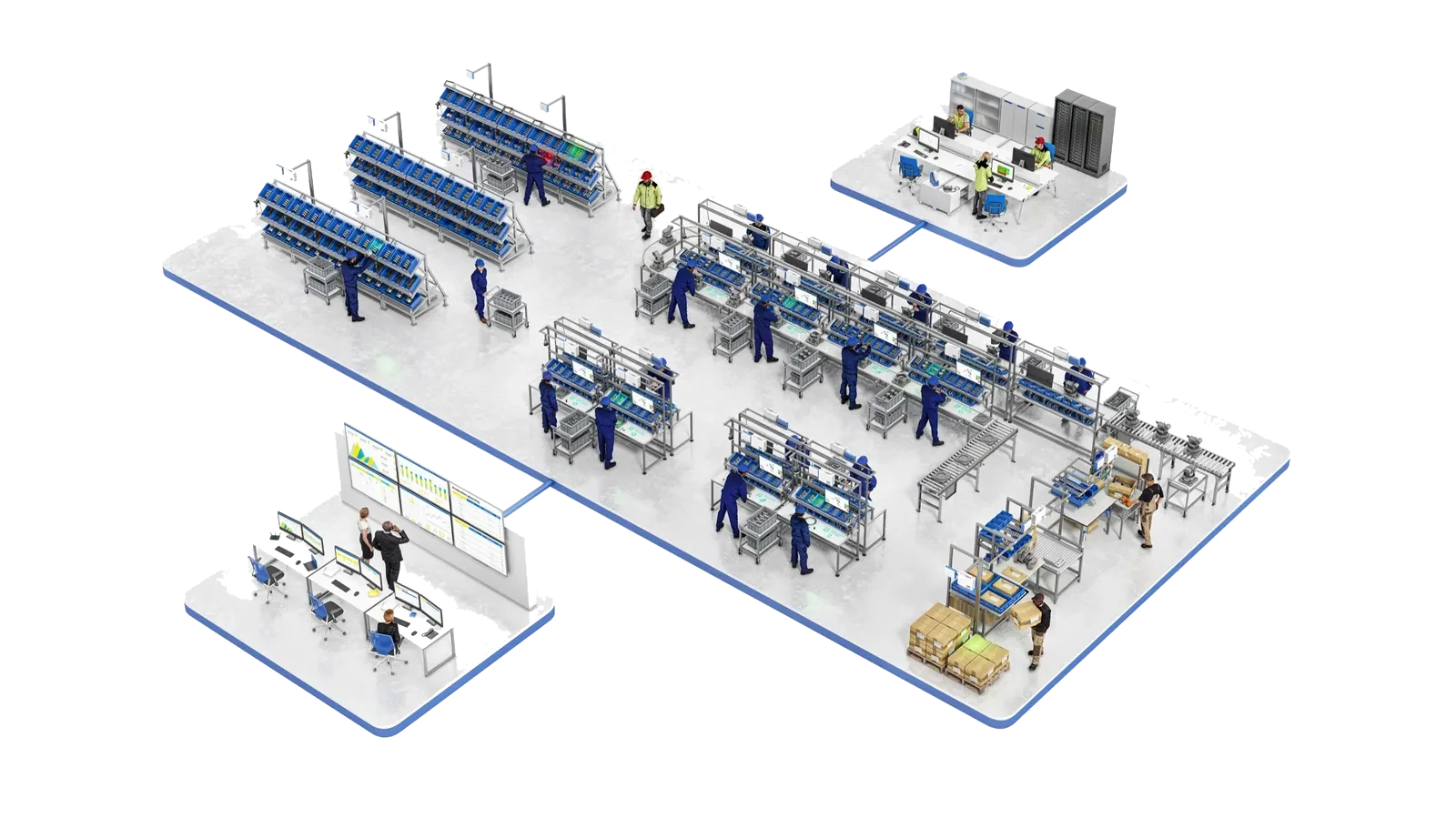
Because all projects are stored on the central Arkite server, the same validated procedure runs on every identical workstation. Projects can be exported and imported between servers, so a proven process can be transferred to other plants.
| Paper SOPs | Arkite | |
|---|---|---|
| Updates | Manual, per document | Central, versioned release |
| Variant handling | One document per variant | Shared steps, variant logic |
| Delivery to operator | Read and interpret | Projected step by step |
| Proof of execution | – | |
| Multi-plant rollout | Copy and adapt | Export and import projects |
Standardization should not slow experts down to the pace of novices. It should give everyone the same validated standard, with the right level of guidance.
Arkite turns SOPs into digital workflows that are projected step by step at the workstation. With VALIDATE, each step is checked in real time, so every operator follows the same validated procedure.
Each project has a version and a status: Draft, Review or Production. A full version history is kept, and an optional approval workflow restricts release to production to users with the Approver role.
Yes. Projects can be exported from one Arkite server and imported on another, so a validated process can be deployed and maintained consistently across sites.
Yes. Detections rely on fixed positions for parts, tools and fixtures. Virtual fixtures can be projected onto the workbench, which supports an organized 5S workstation.
Start with one workstation type and scale the same standard across lines and plants.
Arkite
Operator guidance platform
Welcome to Arkite.
Looking to guide, validate and inspect manual work? Choose where you would like to start.
Prefer email? info@arkite.comPrivacy
Your privacy choices
We use analytics to understand how the website is used and, with your permission, to measure the results of our campaigns on LinkedIn and Google. Measurement runs through our own server; no tracking scripts from other companies are loaded in your browser. See our privacy notice.